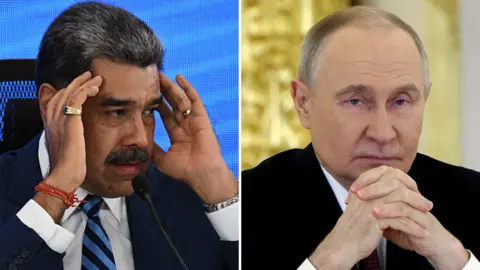
Vladimir Putin may have a reputation among some as a ruthless autocrat, a master manipulator of the international scene. But one thing Russia's president does not have is a poker face.
The late US Senator John McCain used to joke that when he looked into Putin's eyes, he saw three things: 'a K and a G and a B,' a reference to his past life as a Soviet intelligence officer.
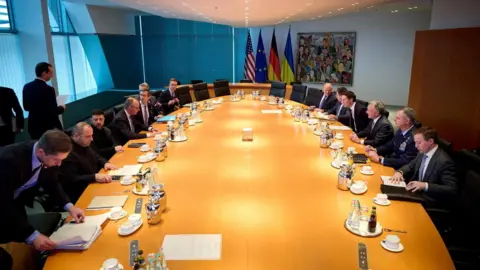
Putin's emotions were on full display during his recent interactions with American envoys in the Kremlin. His apparent confidence suggests he believes the diplomatic tide has shifted in his favor amid battlefield gains.
As analysts speculate, many argue there is little incentive for Putin to retreat from his demands concerning Ukraine, which include relinquishing the last 20% of Donetsk under Ukrainian control and ensuring military restrictions on Ukraine.
Looking ahead, potential diplomatic paths may unfold. For instance, some suggest US President Donald Trump might push for a ceasefire with terms detrimental to Ukraine, but Trump has indicated he could withdraw support if negotiations are unsatisfactory.
In contrast, Europe seems geared towards a coalition to support Ukraine. However, some officials suggest Europe should prepare for a long drawn-out conflict and offer support that not only aids Ukraine in immediate confrontations but also prepares it for years of struggle ahead.
Regarding sanctions, while Russia's economy is suffering, effective responses have evaded Kremlin's policies, maintaining Putin's aggressive posture. Analyst opinions diverge on whether sanctions can alter Kremlin calculus significantly.
The question arises: Can Ukraine mobilize more of its armed forces? Despite being the second-largest army in Europe, Ukraine faces challenges in replenishing its ranks and curtailing desertion rates amongst fatigued soldiers.
Meanwhile, Xi Jinping of China, as a key player, might be inclined to leverage his relationship with Putin to de-escalate tensions if it aligns with Chinese interests.
The conflict also poses existential questions about national narratives and alliances. As international dynamics shift amidst concerns over uprising domestic dissatisfaction within Russia, the possibility for peace hinges significantly on diplomatic negotiations led by the US and possibly, China.
In conclusion, the resolution of the Ukraine conflict will depend on myriad factors: military capabilities, economic sanctions, international diplomacy, and cooperation—or lack thereof—from global powers in navigating a stable path forward.