The recent military actions of the M23 rebel group in eastern Democratic Republic of Congo (DRC) have raised alarms regarding the stability of a recently brokered peace deal by former US President Donald Trump. The rebel group announced it has 'fully liberated' the city of Uvira, a strategic location that has become a focal point amid rising tensions between various factions.
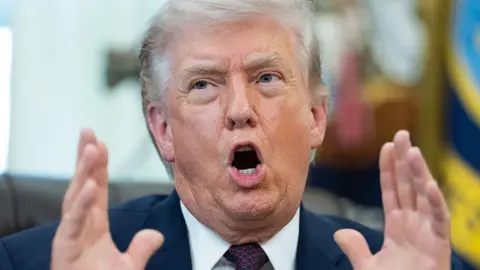
US Secretary of State Marco Rubio has publicly criticized Rwanda, alleging its involvement in the hostilities constitutes a 'clear violation' of the peace accord ratified by Trump, which was celebrated as a remarkable achievement in diplomatic efforts for the region.
Former US President Trump had touted the agreement as pivotal for African stability, amidst claims that it would enhance cooperation between DRC's President Félix Tshisekedi and Rwanda's President Paul Kagame. However, the advances made by the M23, reportedly supported by Rwanda, have not only brought into question the feasibility of this peace initiative but also highlighted the complex dynamics at play in the ongoing conflict.
Analysts suggest that the M23's actions may be a calculated move to strengthen their negotiating position before discussions with the DRC government and other stakeholders. Furthermore, Uvira's capture could complicate Burundi's military involvement in DRC, as it was previously supporting government forces against the rebels.
This development, the M23’s advancement, casts a shadow over the peace process, with experts now pondering the potential repercussions for both regional stability and international diplomatic efforts. As fighting continues, concern grows over the implications for civilians caught in the crossfire and the looming threat of a renewed regional conflict.