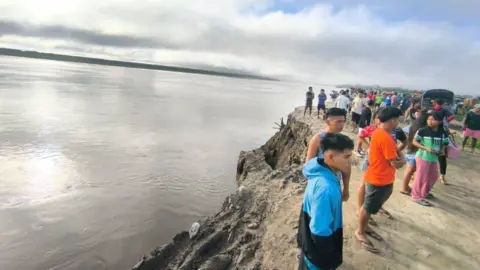
POINTE-AU-CHIEN, La. (AP) — Cherie Matherne looked out into Bayou Pointe au Chien, wide enough for several boats to pass through. In the distance, a stand of dead trees marked where saltwater comes and goes during storm-driven flooding.
It wasn’t always this way. The bayou was once shallower and just wide enough for a small boat to pass. Land that cattle once roamed is submerged now, and elders tell stories of tree canopies once so lush they nearly shut out the day.
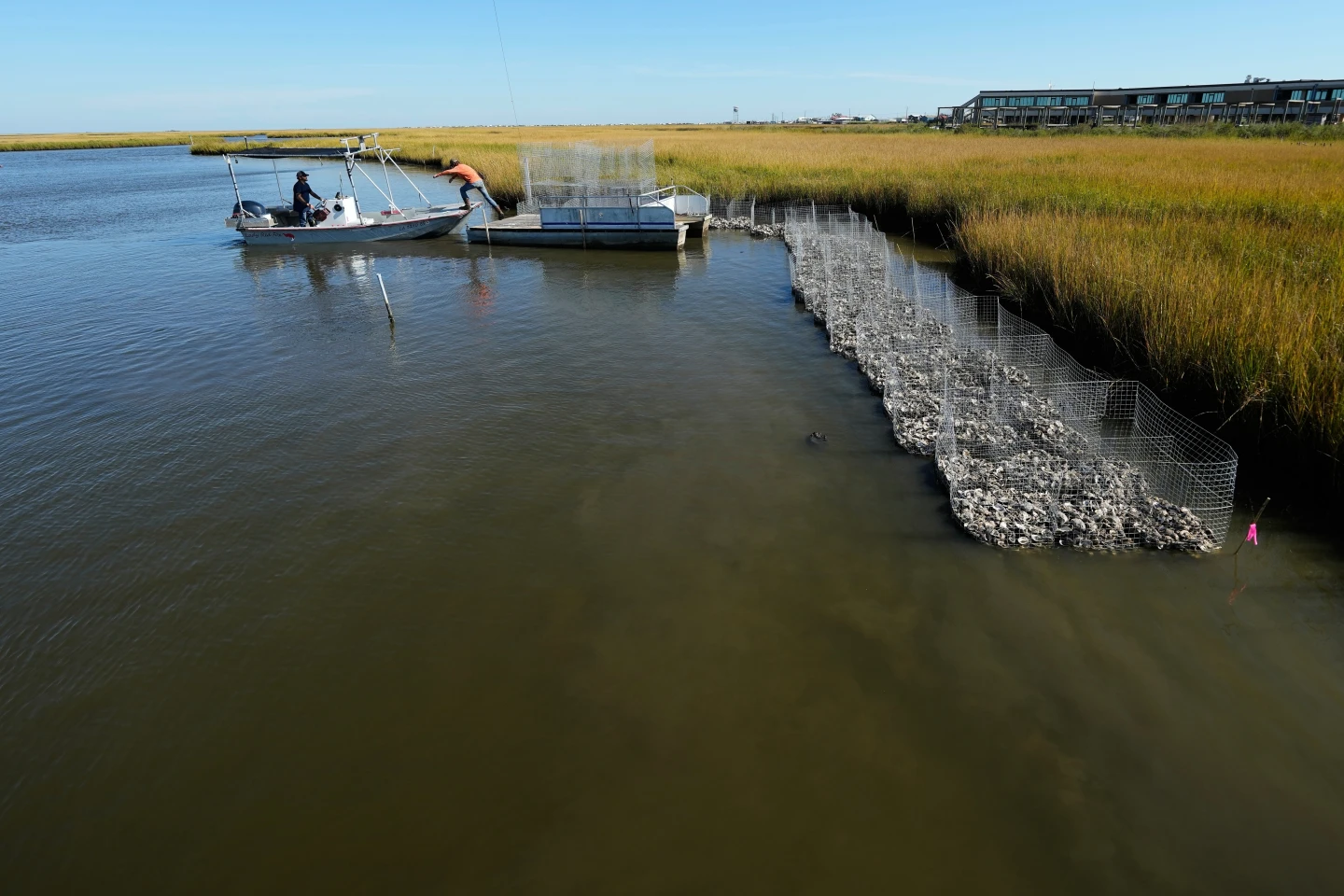
The delicate lattice of Louisiana’s coastline has been steadily retreating for generations. As it does, the Pointe-au-Chien Indian Tribe and other Indigenous people are fighting to protect what’s left and to adapt to their changing environment. That includes a painstaking effort to build makeshift reefs that slow erosion and sturdier homes and buildings to better withstand storms.
“We want to be able to make it so that people can stay here for as long as possible, for as long as they want to stay,” said Matherne, who as the tribe’s director of daily operations helped coordinate its response to the erosion threat.
They hope to avoid the fate of the Jean Charles Choctaw Nation, a nearby tribe that was forced to move three years ago about 40 miles (64 kilometers) north from the encroaching Gulf of Mexico. Isle de Jean Charles — their island home southwest of New Orleans — has lost 98% of its land.
What’s Eating Away at the Louisiana Coastline
Louisiana’s coast has been steadily retreating for several reasons. Levees along the Mississippi River have severed the natural flow of land-creating sand, silt, and clay, starving wetlands of sediment they need to survive. Canals have allowed saltwater to flow into wetlands, killing freshwater vegetation that holds them together and accelerating erosion. Groundwater pumping is causing land to sink, and planet-warming emissions from burning coal, oil, and gas are fueling hurricanes and accelerating sea level rise.
Since the 1930s, Louisiana has lost about 2,000 square miles (5,180 square kilometers) of land — sometimes fast, sometimes slow, with reports indicating that during periods of worst erosion, a football field’s worth of coastal wetlands was disappearing every 34 minutes.
Indigenous burial and cultural sites are at risk of eroding, and traditional ways of life — shrimping, fishing, and subsistence farming — are under pressure. Without action, researchers estimate the state could lose up to 3,000 square miles (7,770 square kilometers) — an area larger than Delaware — over the next 50 years.
Slowing Erosion with Recycled Oyster Shells
Reefs built from oyster shells are one attempt to stem the erosion, with a program launched by the Coalition to Restore Coastal Louisiana recycling more than 16 million pounds of shells. This initiative aims to protect cultural and important coastal areas from erosion, and as the Pointe-au-Chien tribe has noted, recent efforts have measured a 50% reduction in land loss around built reefs.
Fortifying Buildings from Powerful Storms
When Hurricane Ida struck in 2021, it damaged numerous homes in Pointe-au-Chien, leading many families to consider relocation. With support from organizations like the Lowlander Center, the tribe is now rebuilding homes higher off the ground and fortified against future storms.
Future Plans and Challenges
Despite efforts, the tribe continues to face significant hurdles, including struggles for federal recognition which hampers their ability to secure necessary funding. This has resulted in applications for infrastructure and community projects being tabled amidst cuts in federal aid.
As elder Theresa Dardar states, “This is where our ancestors were, and we feel like we would be abandoning them” if they were to leave. She emphasizes their cultural connections to the land and the need for ongoing protection efforts aimed not just at physical structures but at their way of life.