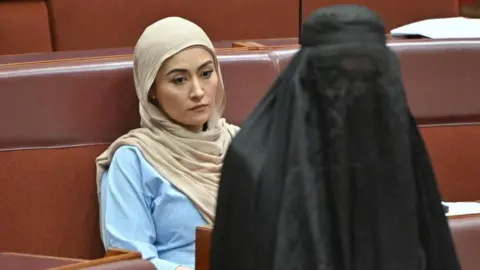
King Charles's recent visit to Australia took an unexpected turn when he was heckled by independent Senator Lidia Thorpe, who boldly declared, "you are not my King," following his address at Parliament House in Canberra. The senator, an Aboriginal Australian and outspoken advocate for Indigenous rights, interrupted the royal proceedings for nearly a minute, making claims concerning the historical injustices faced by Indigenous peoples in Australia.
The commotion began just after King Charles had concluded his speech and was returning to sit beside Queen Camilla. Thorpe, who had walked from the back of the assembly towards the front, expressed her sentiments about sovereignty and land, shouting, "This is not your land, you are not my King." This disruption occurred against the backdrop of ongoing debates in Australia regarding its colonial history and the rights of its Indigenous populations.
King Charles is making his first trip to Australia since assuming the throne in September 2022, and as such, the visit holds considerable significance. While some Australians lined up outside Parliament House to greet the royal couple, others echoed sentiments similar to Thorpe’s, signifying a split in public opinion regarding monarchy and colonization. Thorpe later conveyed that her protest aimed to send a crucial message that true sovereignty comes from the land and that discussions for a treaty with Indigenous peoples must be prioritized by the Parliament.
During an earlier part of the ceremony, King Charles spoke about Indigenous communities, emphasizing his respect for their experiences and wisdom. Nevertheless, Thorpe's intervention brought an intensified focus on the ongoing discussions about Australia's colonial legacy and the need for reconciliation with its first inhabitants.
Despite the protest, many Australians remain supportive of the monarchy, with some expressing excitement at meeting the royal couple. However, calls for a republic and increased recognition of Indigenous rights linger, with Prime Minister Anthony Albanese being a noted supporter of republicanism, although he has dismissed immediate plans for another referendum on the matter.
As King Charles navigates this complex landscape, marked by historical grievances and contemporary aspirations for change, his visit has inadvertently illuminated the ongoing dialogue surrounding Australia's identity in relation to its colonial past.