The Himalayan monal is changing its voice as the mountains grow louder
Research from Uttarakhand, India, shows that the region’s iconic monal pheasant is not only shifting its altitude but also altering the pitch of its calls in response to rising human noise in the valleys it haunts.
A bird that defines the Himalayas
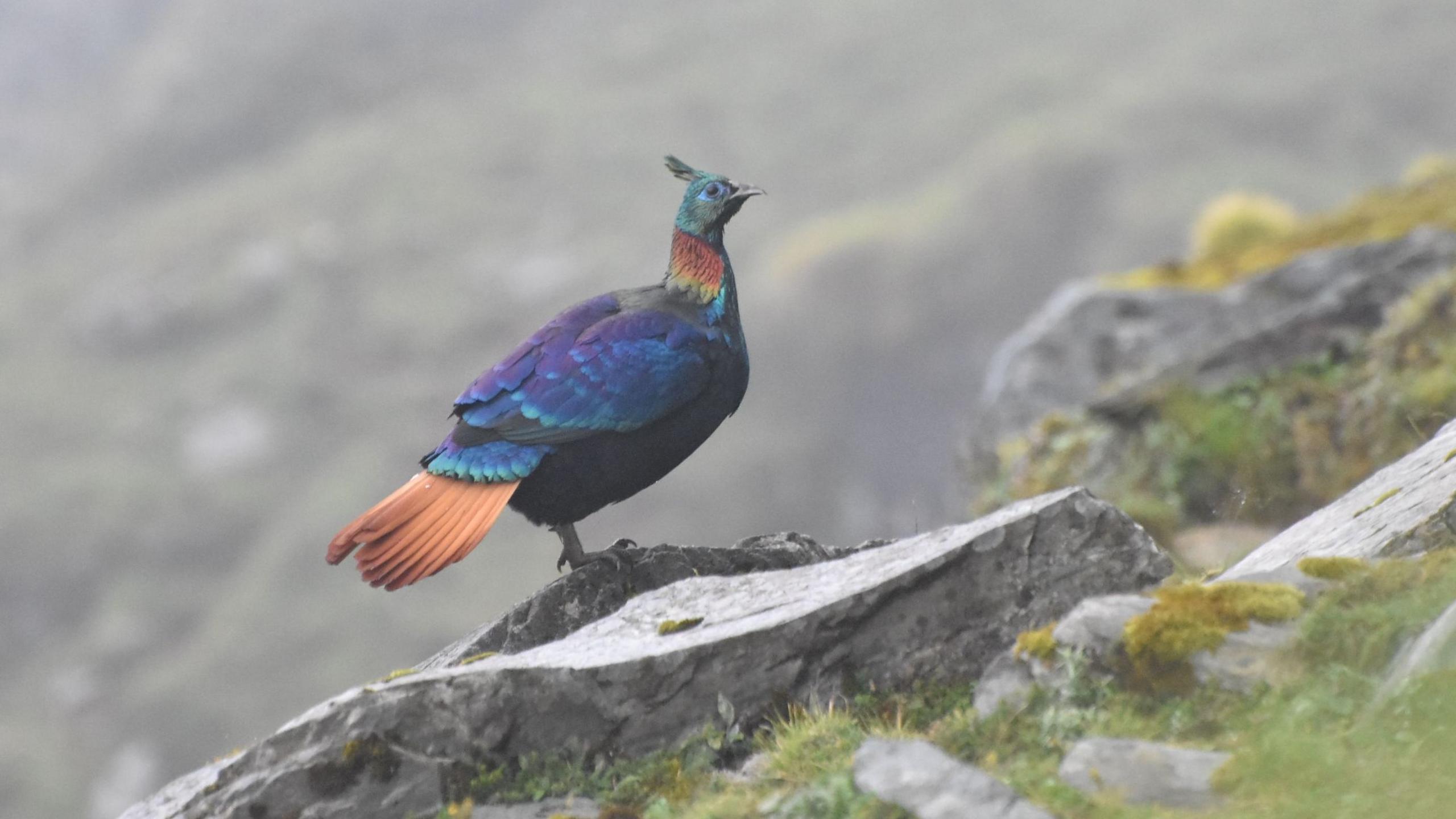
The monal—known for the male’s brilliant green, blue and copper plumage—has long been a symbol of the Himalayan cultures, serving as the state bird of Uttarakhand and the national bird of Nepal. Its presence in alpine meadows, beyond the tree line, makes it an important indicator of the health of this fragile ecosystem.
Two studies reveal a dual response to human pressures
In a five‑year project led by Dr‑Rajeev Lochan of the Hemvati Nandan Bahuguna Garhwal University, scientists mapped the monal’s habitat and found it increasingly forced to occupy higher elevations as agricultural and tourist activity pushes onto lower alpine grounds. Modeling based on Inter‑governmental Panel on Climate Change scenarios predicts that, by 2100, suitable habitats will shrink and fragment, threatening long‑term population viability.
The second study, also by Lochan, Dr‑Dinesh Kumar Sharma and Dr‑Anand Kumar, recorded more than 700 monal vocalisations in two contrasting settings—the noisy Chopta tourist valley and the quieter Madmaheshwar sanctuary. Analysis of the recordings revealed that birds in the noisy valley consistently produced calls with higher peak frequencies and shorter durations, adaptations that help their songs cut through low‑frequency traffic noise.
What the changes mean for the Himalayas
These findings illustrate the monal’s behavioural flexibility but also underscore the looming ecological pressures on mountain forests. If a bird with such a narrow, seasonally migratory range must change both its acoustic signals and its address, more sensitive species that cannot adapt as readily might face greater risks.
Climate change, unchecked tourism and expanding infrastructure are together creating a “tipping point” for Himalayan biodiversity, scientists argue. The monal’s altered calls and upward migration serve as a loud, audible sign that these ecosystems need better alignment between development and conservation.
Agendas for further research
Lochan and his team call for broader, long‑term studies to quantify the ecological consequences of these vocal and elevational shifts. Their preliminary data hint at a widening knowledge gap: does elevated acoustic pressure affect mating success, or could it even drive evolutionary change in the future?
“In listening to the monal, we hear the Himalayas asking for space, silence and care,” says Anjal Prakash, a public‑policy professor at FLAME University and contributor to IPCC reports. The time for action, according to the researchers, arrives now if we wish to preserve the mountains’ unique avifauna and the cultural heritage they embody.