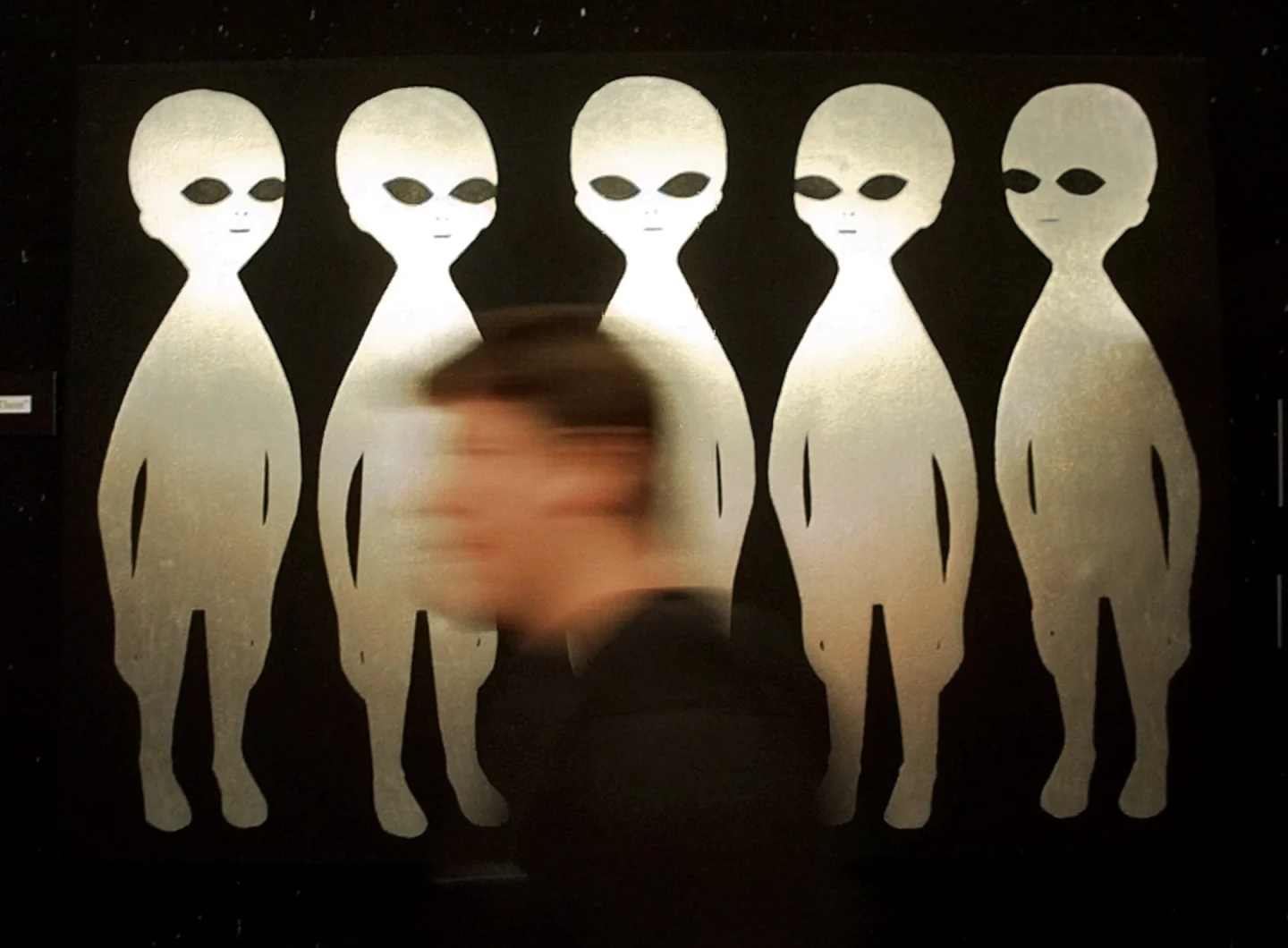
For generations, humans have pondered what alien life would be like, yet we seldom consider how they might view us. Theoretical physicist Avi Loeb offers a rather critical perspective: If I were looking at Earth from a distance, I would be pretty disappointed. Most of our investing is dealing with conflicts to prevent other people from killing us or us killing others. That is not a sign of intelligence, he states.
The conversation around extraterrestrial life gained momentum when former President Barack Obama acknowledged that aliens are real but stated he hasn’t seen them and they’re not being held at Area 51. Following his remarks, former President Donald Trump pledged to release government files about unidentified flying objects (UFOs) due to public interest.
In the U.S., the intrigue surrounding UFOs coincides with its ambitious return to lunar exploration through NASA’s Artemis II mission. As astronauts prepare to fly around the moon, the specter of extraterrestrial life continues to evoke curiosity about the unknown.
With a backdrop of ongoing conflicts, climate change, and social division, it’s compelling to reflect on what extraterrestrial life might conclude about our struggles. The sentiment resonates with the adage from The X-Files: The truth is out there, as a considerable number of Americans, according to a 2021 Pew Research Center survey, posit the existence of intelligent life beyond Earth.
Bill Diamond, president of the SETI Institute, posits, We don’t want to think this is the only place in this extraordinarily and incomprehensibly large universe where life and intelligence and even technology have emerged. The implication seems to reflect humanity's fear of being alone amidst the vast universe.
UFO phenomena have captivated American imagination since claims of debris recovery near Roswell in 1947, which has led to a plethora of science fiction narratives portraying aliens often as aggressors—reflections of our societal conflicts. Duke University professor Priscilla Wald suggests, It seems to me it’s a reflection on who we are, that we’re projecting onto aliens the way we treat each other.
The Pentagon’s release of hundreds of reports on unidentified aerial phenomena in 2024 has not yet confirmed extraterrestrial origins but enhances the public's curiosity. Such inquiries into the sky by individuals like Debbie Dmytro, who reported seeing unexplainable objects, exemplify a broader cultural narrative seeking scientific proof and clarity regarding these phenomena.
Retired Rear Adm. Timothy Gallaudet emphasizes a need for scientific investigation into UAPs, indicating the existence of nonhuman intelligence behind these phenomena as a valid concern, particularly when they interact closely with military aircraft.
Experts like Loeb suggest that if extraterrestrial civilizations exist and are observing Earth, they might find human behavior perplexing or even entertaining. They might be laughing at us...to make sure we will not become predators that may become dangerous to them, he remarks.
Ultimately, the ongoing quest for the truth about extraterrestrial life reflects humanity's deeper desires for understanding and connection. As we continue to explore our universe, the common plea remains: seek the truth and learn from our experiences.