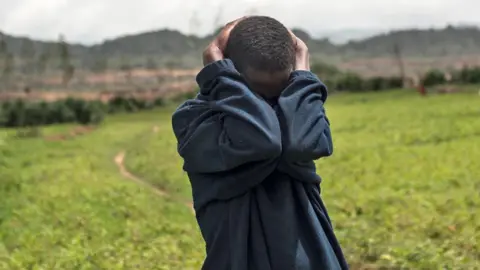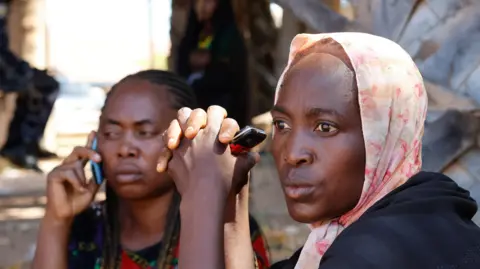
In a positive turn of events, around 100 children who were abducted from a Catholic school in central Nigeria last month have been freed, according to authorities. The police chief of Niger state, Adamu Abdullahi Elleman, along with Bishop Bulus Dauwa Yohanna, confirmed the students' release after receiving updates from the president's national security advisor.
While the exact details surrounding the timing of reunification with their families remain unclear, it has been indicated that authorities may require additional time to process the pupils before their formal handover. There is also uncertainty regarding the means through which their release was secured, including whether negotiations were made or if ransoms were paid.
The troubling trend of mass abductions in Nigeria has been alarming, with over 250 students and 12 staff members taken from St Mary's Catholic School in Papiri during this recent wave of kidnappings. Bishop Yohanna highlighted that the current whereabouts of the released children are unknown.
Governor Abdullahi Sule of the neighboring Nasarawa state remarked on the federal government's instrumental role in the release but noted the sensitive nature of the behind-the-scenes efforts, which cannot be disclosed for security reasons.
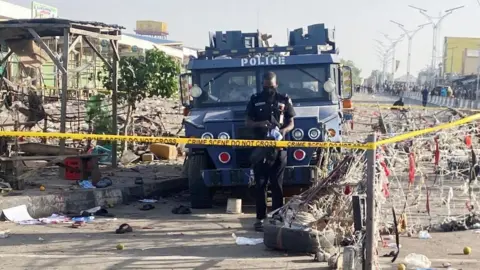
In the wake of multiple kidnappings—such as the attacks on places of worship and schools in the region—Nigerians have increasingly expressed their concerns about safety. Notably, past incidents show that schools and religious institutions have been frequent targets for such crimes.
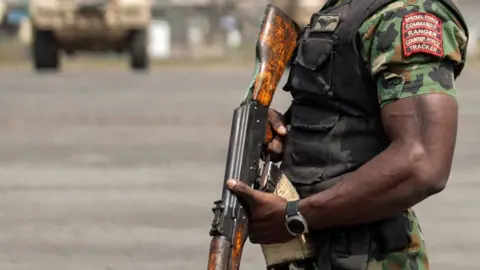
This ongoing crisis emphasizes the need for effective security measures, as the surge in these kidnappings continues to create fear among parents and communities. Although the Nigerian government has criminalized the payment of ransoms, many assert that money is often exchanged in various cases.
The international community has also taken note, as discussions regarding targeted violence have escalated, raising questions about the broader implications for human rights and safety in Nigeria.
With this recent release providing a breath of hope, it remains crucial to address the underlying security challenges that have contributed to Nigeria's current instability.