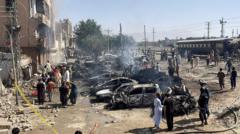
Pakistan's military says it has killed at least 92 militants blamed for deadly coordinated attacks in the south-western Balochistan province on Saturday.
The military reported that 15 security personnel and 18 civilians were also killed in the violence. It accused India of supporting the militants, a claim temporarily dismissed by Delhi.
The Balochistan Liberation Army (BLA), which claimed responsibility for the assaults, stated that dozens of soldiers had been killed. Claims made by both sides remain unverified independently.
This escalation marks one of the deadliest days in a region where Pakistan's government has faced an ethnic insurgency for decades. Late on Saturday, the military attributed multiple attacks targeting civilians around Quetta and other cities to the militants, prompting a series of clearance operations across Balochistan.
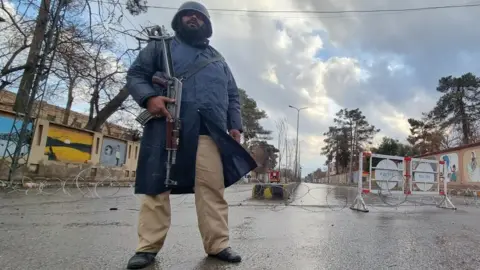
Key administrative buildings in Quetta were sealed, mobile phone services were disrupted, and train services were halted as a security precaution. Prime Minister Shehbaz Sharif praised the military's response, pledging to continue the campaign against terrorism until it is completely eradicated.
On the day of the attacks, militants armed with grenades and firearms targeted 12 cities and towns, attacking police, paramilitary installations, prisons, and government buildings. The BLA alleges the federal government exploits the province's rich mineral resources without benefiting local populations, exacerbating local grievances that date back to 1948, following Pakistan's independence.
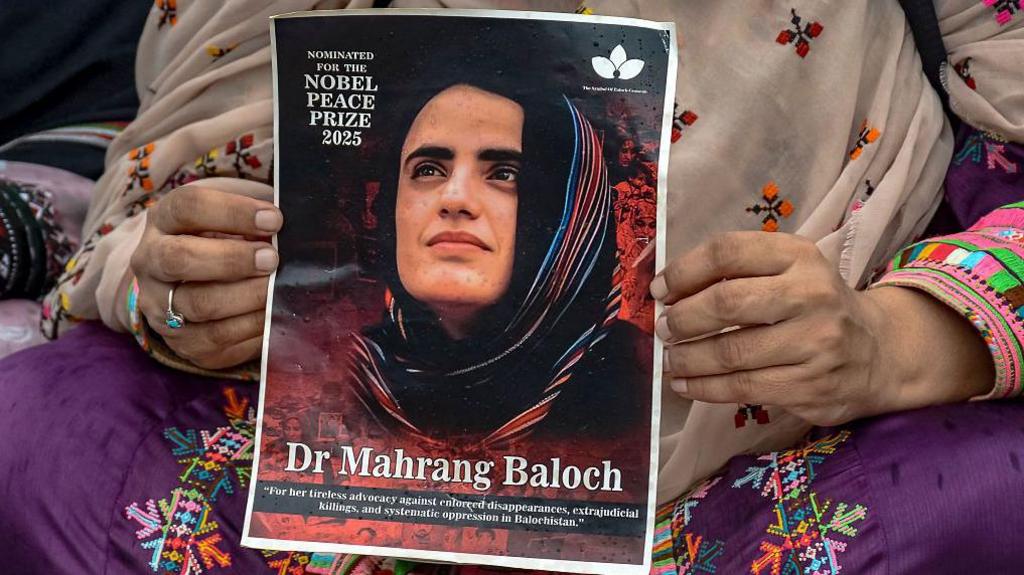
Local activists accuse Pakistani security forces of enforced disappearances, a claim dismissed by Islamabad. Balochistan, which shares borders with Iran and a Taliban-controlled Afghanistan, is strategically significant, hosting resources crucial for both national and regional stability.
The province is home to the Baloch tribe, the largest ethnic group in the region, which covers nearly 44% of Pakistan's land but only 5% of its population, highlighting a stark disparity in resource distribution and political representation.
}