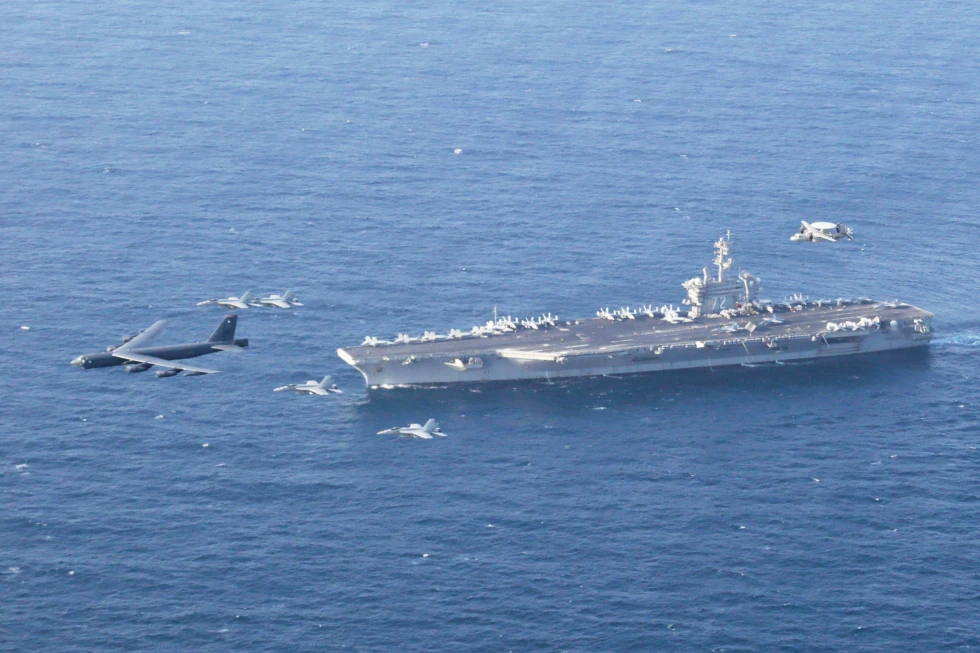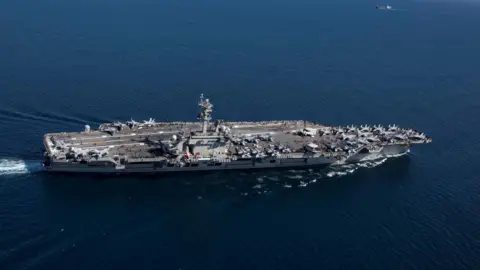
Amid the din of global speculation over a U.S. military build-up in the Middle East, Israeli leaders have remained unusually silent. Aside from some remarks in support of Iran's anti-government protests this month, Israel's Prime Minister has had little to say publicly about his superpower ally taking on his biggest enemy. His government has remained equally silent.
It shows you the importance Netanyahu puts on this moment, said Danny Citrinowicz, who served for 25 years in Israel's Defence Intelligence, and is now senior Iran researcher at Israel's Institute for National Security Studies. For Netanyahu, being in this position where the U.S. has so many forces in the Gulf, being so close to Trump attacking Iran, this is - for him - a golden moment in time that he cannot forgo.
Strategies are unfolding within Israel, viewing Trump's potential military actions against Iran not just as a military maneuver, but as an opportunity for regime change. Former deputy director of Israel's signals intelligence unit, Asaf Cohen, suggests that Israeli leadership believes allowing the Americans to lead is prudent, as the U.S. holds stronger military and global legitimacy.
Prime Minister Netanyahu perceives Iran as a primary threat and believes that the current moment, marked by Iran's vulnerability, presents a unique opportunity. Recent discussions between Israeli military intelligence and U.S. authorities focused on possible targets in Iran, suggesting a historical alignment of interests between the two nations.
However, opinions within Israel vary on the nature of military engagement with Iran. While some advocate for decisive action, others caution against the risks of regime change, including potential retaliation that could destabilize the region further. Mixed sentiments among the Israeli public reflect a broader debate on whether military action or diplomatic efforts would be more prudent moving forward.
The situation remains dynamic, with the outcomes hinging not only on military strategies but also on the complex geopolitical fabric that ties Israel, the U.S., and Iran together. As both nations express openness to negotiations, analysts remain divided on what these developments could mean for security in the Middle East.