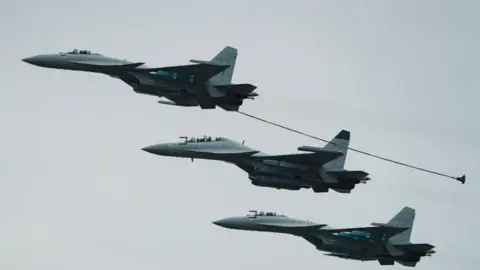
Japan has protested after Chinese fighter jets locked radars on Japanese aircraft as tensions between the two nations worsened.
Locking radar onto an aircraft is considered a threat because it can signal a potential attack. Japan reported two incidents on Saturday off its southern Okinawa islands.
In response, Japan scrambled its fighter jets against the Chinese J-15 fighters, while Beijing accused Tokyo of 'harassing' its forces during a training exercise. No injuries or damage were reported.
Diplomatic ties between Japan and China have spiralled since last month, after Japanese Prime Minister Sanae Takaichi suggested that Tokyo could take military action if Beijing attacked Taiwan.
Beijing views self-governed Taiwan as part of its territory and has not ruled out the use of force to 'reunite' with it.
Both sides have since engaged in increasingly hostile rhetoric toward each other, with the widening rift affecting daily life for citizens in both countries.
Last week, conflicting accounts emerged regarding a confrontation near disputed islands in the East China Sea.
A Japanese defense ministry official expressed that the intention behind the locking of radars by the Chinese J-15 jets was 'unclear' but emphasized that there was 'no need' to lock onto Japanese planes if they were just trying to locate other aircraft.
The J-15 jets, launched from China's Liaoning aircraft carrier, first locked their radar on Japanese jets at 16:32 local time on Saturday and again at around 18:37.
The official stated that the Japanese aircraft did not engage in any actions considered provocative.
It is extremely regrettable. Japan has strongly protested to the Chinese side, and we firmly requested measures to prevent recurrence, Takaichi told reporters Sunday. We will respond calmly and resolutely, she emphasized.
The Chinese navy, however, stated Japan's claims were 'completely inconsistent with the facts' and urged Tokyo to 'immediately stop slandering and smearing,' stating the training exercise had been previously announced.
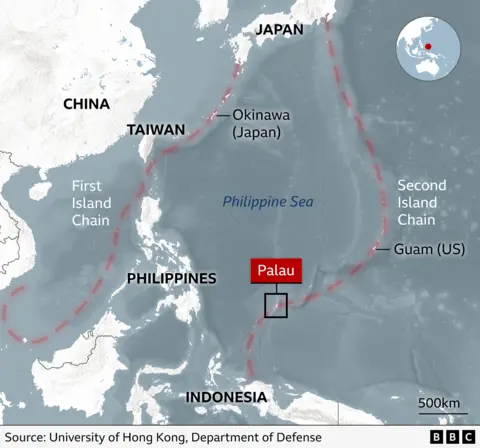
This incident follows Japan scrambling aircraft two weeks prior when a suspected Chinese drone was detected near Yonaguni, an island near Taiwan. Japan plans to deploy missiles from Yonaguni, further inciting anger from Beijing.
Over the past month, these heightened tensions have led China to advise its citizens to avoid traveling to Japan, alongside a ban on the importation of seafood from Japan and a suspension of popular Japanese films in Chinese cinemas.